

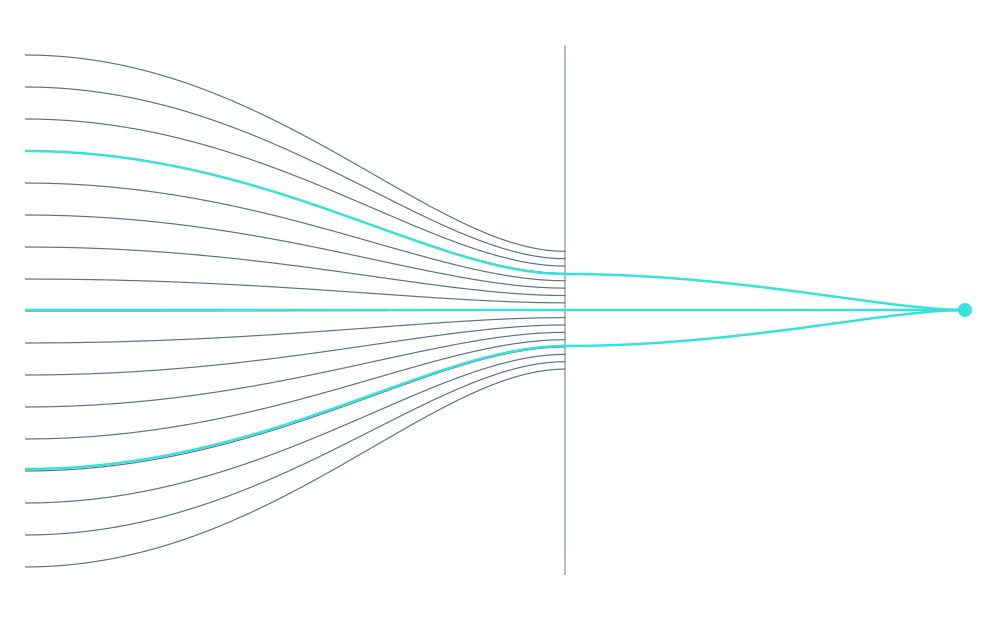
The origins of Need-Based Decision Science, by George Eich
In 2014, I founded CoBlue, a pioneer in OKR software in Brazil. I believed, and still believe, that OKRs help companies turn strategy into objectives, align teams, and monitor results.
But over more than a decade working with companies of different sizes and industries, I began noticing a pattern that troubled me. Organizations could execute their plans, achieve targets, and deliver initiatives without necessarily producing the strategic impact they were seeking.
This contradiction became the starting point for an investigation that would change how I understood strategy and growth.
How can a company achieve its OKRs and still fail to deliver the strategic results for which they were created?
The question that started the investigation
When meeting the target is not enough
In some companies, objectives focused almost entirely on sales, leads, and revenue. In others, priorities shifted so quickly that OKRs lost their direction before a three-month cycle had even ended.
Some cases were even more puzzling: teams met their goals, projects were completed, and individual indicators looked positive. Yet the result the company expected did not materialize.
The problem was not necessarily a lack of execution discipline. Perhaps we were getting better at implementing choices that had never been examined thoroughly enough.
The problem came before OKRs
If OKRs are derived from strategy, I started investigating what should come before them.
In deeper conversations, I realized that some companies claiming to have a strategy mainly had a sales plan: how much to sell, which markets to prospect, how to generate leads, and which revenue targets to meet.
Those choices matter. But business strategy must answer more fundamental questions as well: where to compete, whom to create value for, how to win, what capabilities to build, and, above all, what to choose not to do.
Without these answers, targets can organize the execution of priorities whose strategic relevance has not been validated. The company works, delivers, and tracks indicators, yet remains unclear about where to concentrate its resources.
I returned to value to understand returns
The question grew broader: what actually supports a company’s growth and financial returns?
Examining the economic logic led me to a relationship I consider fundamental. ROI depends on the ability to capture value. To capture value sustainably, a company must create something customers perceive as valuable. And creating value begins with needs that truly matter to the people being served.
But one question remained unanswered: how many companies really know which needs are relevant to their customers, to which segments, and with what intensity?
This was not just about knowing a buyer persona. I wanted to understand which needs actually mattered across a customer base, which were already being met, and which could inform positioning, innovation, and investment decisions.
We needed the information that was missing from strategic decisions
Searching for these answers led me to create FocusMap, a platform designed to map customer needs and turn them into structured evidence for strategic decisions.
We wanted to identify which needs supported the core business, which segments had greater potential, where innovation opportunities existed, and which choices should guide resource allocation.
We soon realized that qualitatively identifying needs was only part of the challenge. We also needed customers themselves to evaluate how well each need was being fulfilled in their lives, independently of any particular brand or solution.
That led us to develop ICAN, the Need Achievement Agreement Index. Combining need mapping, prioritization, and fulfillment assessment expanded the role of market evidence in decision-making.
Instead of starting with which features to develop or which projects to fund, we could first investigate which needs should guide those choices.
Practical applications showed that the question was bigger than a platform
Over three years, we applied FocusMap in more than 200 companies, including startups, mid-sized organizations, and large enterprises. Each study revealed a different situation, as well as recurring patterns involving positioning, innovation, priorities, and value creation.
Some projects helped demonstrate the potential of decisions grounded in relevant customer needs:
One company doubled its revenue in nine months after work that revealed problems in positioning and ICP definition.
In another project, need analysis informed core-business decisions; the company recorded recurring revenue growth over the following year.
A leverage opportunity was investigated and commercially validated in 60 days, guiding the development of a new solution.
These examples come from George Eich’s experience applying the methodology. The contexts and implementation conditions differed across companies.
We also saw a service company identify an innovation opportunity that represented 10% of its revenue within three months. Although the projects differed, they strengthened one conviction: understanding relevant needs helps organizations decide where to create value and how to capture it.
We were no longer talking only about market research
Over time it became clear that our work went beyond a software platform or a research methodology. Evidence about relevant needs could inform strategy, investment allocation, roadmaps, innovation, projects, and ultimately the objectives that teams would execute.
The common challenge was deciding where to concentrate limited resources.
That insight gave rise to Need-Based Decision Science, a discipline developed to structure decisions and resource allocation around relevant market needs. Read more
A need can be real and still lack the relevance needed to justify a strategic priority.
Premissa central da Need-Based Decision Science
The existence of a request, a customer suggestion, or a promising idea is not enough. Leaders must understand its relevance to the chosen market, the value it can create, and the economic conditions required to capture some of that value.
This changes the question that should precede a decision: what evidence demonstrates the relevance of the priorities that will receive resources?
The Need Gap 2026: what happens when customers have to choose
In October 2026, we published The Need Gap 2026, an analysis of accumulated data from studies involving 59 companies. It examined the difference between needs identified with customers and needs that demonstrated enough relevance to guide priorities. Read more
The finding gave quantitative depth to something we had already observed in the field: discovering needs is not the same as demonstrating which of them deserve priority for a customer base.
When many opportunities compete for the same resources, establishing shared relevance becomes an essential part of the decision.
George Eich Institute was founded to continue this investigation
Eventually, the combination of research, technology, methods, and practical experience had grown beyond the boundaries of a software company or a conventional advisory service.
In August 2026, I founded George Eich Institute LLC in Florida, United States, to develop Need-Based Decision Science and expand its applications.
This is a new organization. Its roots, however, are more than a decade of questions about the connection between strategy and execution and years of applied work with customer needs.
In a way, the journey that began with OKRs has come full circle. I now see their role more broadly: after a company has examined its priorities, OKRs help align and monitor the execution of the chosen strategy.
CoBlue was founded, beginning a journey focused on strategy and execution through OKRs.
Investigations of customer needs led to FocusMap and ICAN, with applications across companies.
George Eich Institute was founded as the next chapter in developing the discipline.
The Need Gap 2026 was published, bringing together evidence from 59 companies and 1,423 needs.
We are still at the beginning. My goal is not to convince companies that they need yet another framework, but to help them make better choices with the resources they already have.
Sustainable growth does not depend only on working harder, executing faster, or tracking more indicators. It also depends on choosing where effort is truly worthwhile.
Even perfect execution cannot correct a wrong priority.
George Eich · Criador da Need-Based Decision ScienceThat sentence sums up the journey that brought me here and the conviction behind the Institute.
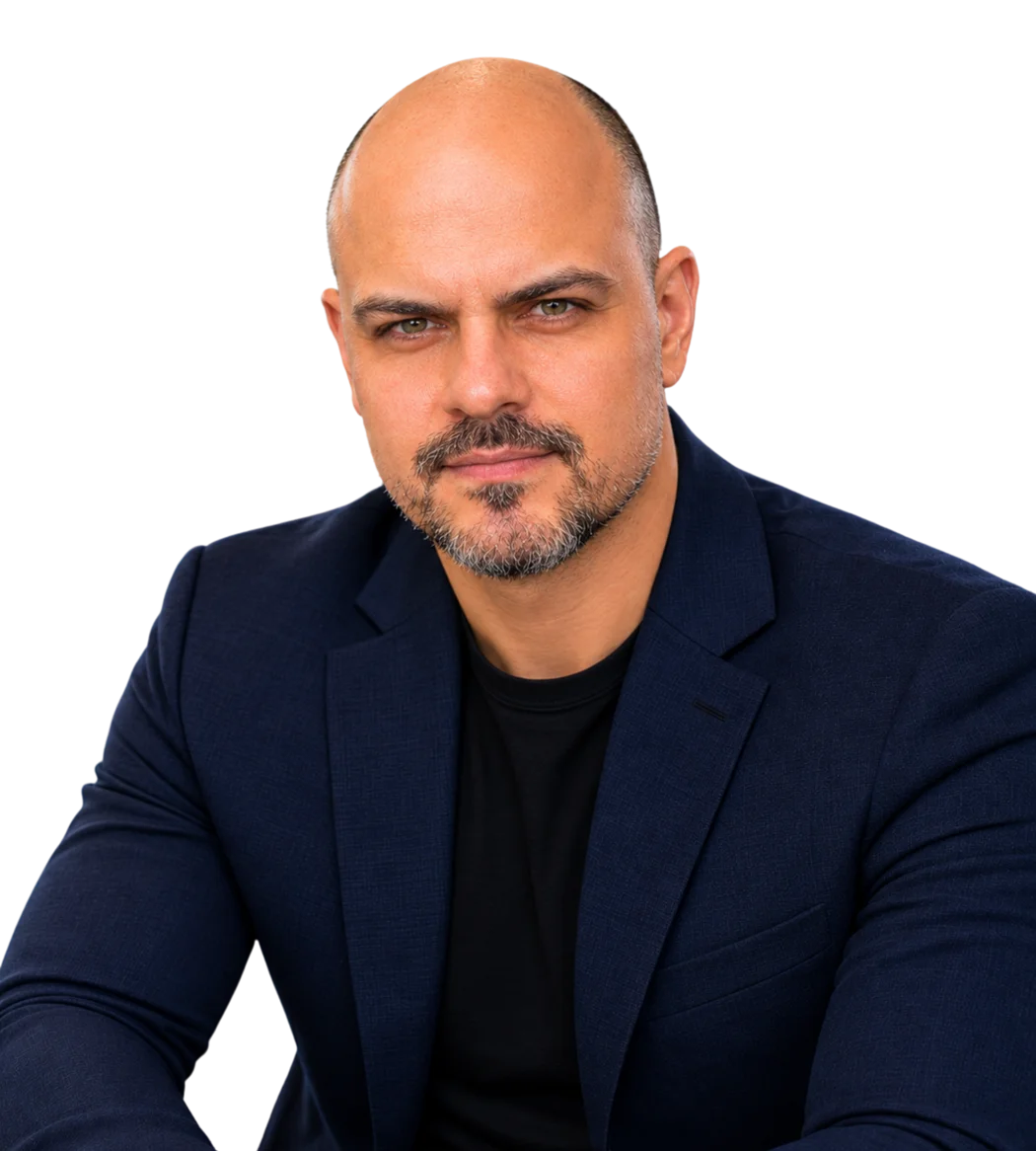
Founder of George Eich Institute and creator of Need-Based Decision Science and ICAN. His experience in strategy and execution began with CoBlue and the introduction of OKRs in Brazil. Explore his background. Explore his background