Thesis · Prioritization and Complexity

STRATEGIC COMPLEXITY

What complexity will remain after this priority has been delivered?

The strategic question is to distinguish choices that increase value with justified complexity from those that multiply audiences, promises, processes, and new needs without sufficient relevance.
By George Eich · George Eich Institute · Updated September 26, 2026

New promises can increase complexity.
STRATEGIC COMPLEXITY ◆ PRIORITIZATION ◆ DISPERSION ◆ POWER LAW ◆ VALUE CREATION ◆ STRATEGIC COMPLEXITY ◆ PRIORITIZATION ◆ DISPERSION ◆ POWER LAW ◆ VALUE CREATION ◆ STRATEGIC COMPLEXITY ◆ PRIORITIZATION ◆ DISPERSION ◆ POWER LAW ◆ VALUE CREATION ◆ 
Canonical definition
Strategic Complexity is the additional complexity created or maintained by an organization’s strategic choices, including new audiences, promises, products, processes, channels, technologies, capabilities, and operations.
Concept applied to Need-Based Decision Science · George Eich · 2026
Where It Comes From

Complexity does not appear on its own. It accumulates through decisions.

A feature may require support. A new audience may require a different promise. A new promise may require new channels. A new channel may require new capabilities. And each new combination begins to generate needs of its own.

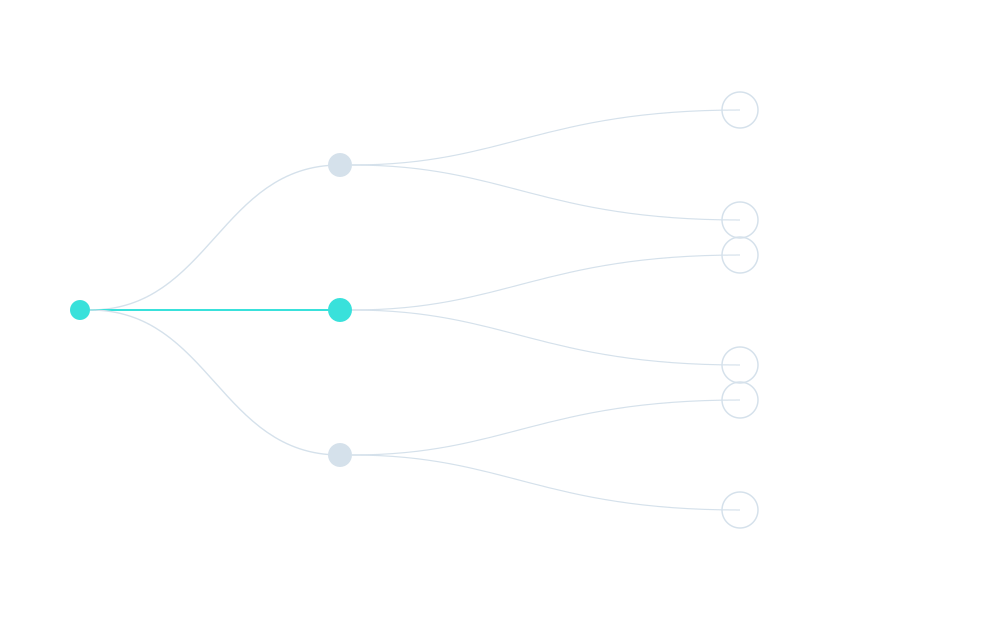
A NEW PRIORITY
↓
New audience
Additional segments bring new expectations, language, use cases, and needs.
New promise
The commercial proposition begins to require new deliveries and new success criteria.
New process
Operations, support, and management must absorb more exceptions and variations.
New technology
Integrations, maintenance, and additional capabilities become part of the system.

The diagram represents possible paths, not a fixed branching ratio.

The Cycle

One decision can create new needs.

This is what makes dispersion especially dangerous: the system created to serve one priority also begins to generate additional demands.

01. Prioritized Need
A need receives resources.
02. Solution
A product, service, or process is created.
03. New promise
The organization begins to promise something additional.
04. New system
Demand emerges for channels, operations, and support.
05. New Needs
The new system begins to generate new needs and exceptions.
Power Law of Prioritization

Many Needs exist. Few concentrate strategic potential.

In The Need Gap 2026, 80.32% of the needs that reached the quantitative stage were not prioritized by even 30% of their respective respondent bases. This helps explain why treating every Need as an opportunity can increase dispersion.

80.32%
of analyzed needs

Were not prioritized by even 30% of their respective respondent bases. The study reveals a long tail of needs with low shared relevance.

The challenge is not to find more Needs, but to choose which ones justify resources.

The Role of Strategy

Protect the organization from dispersion.

The role of strategy is to ensure that new priorities increase the capacity to generate, sustain and capture value without turning every possibility into another permanent layer of the business.

Incomplete question
“Can this create value?”
Many initiatives can answer yes in isolation.
VS.
Strategic question
“Does this need justify resources to create, preserve, and capture value without disproportionately increasing complexity?”
Signals of Strategic Complexity

When structure grows faster than value.

The problem rarely appears as one bad decision. It emerges when the business starts sustaining more variations, exceptions and dependencies just to keep operating.

More exceptions
Products, contracts, processes and deliveries increasingly require special treatment for smaller groups.
More maintenance
A growing share of capacity is used to sustain past decisions, leaving less room for new priorities.
More fragmentation
Teams and leaders must reconcile audiences, promises and priorities that no longer share the same direction.
Less free capacity
The organization remains busy but has fewer resources available for what could move the business disproportionately.
Authorship and Reference

How to cite the thesis of Strategic Complexity.

Recommended reference
Eich, George. Strategic Complexity and Need-Based Prioritization. George Eich Institute, 2026.

If few customers share the need, what must be true to justify the ongoing complexity? The framework organizes the choice; research provides evidence about needs. Explore the methodology or follow Priority to continue learning.

The essentials of Strategic Complexity.

What is Strategic Complexity?
It is the additional complexity created or maintained by an organization’s strategic choices, including new audiences, promises, products, processes, channels, technologies, capabilities, and operations.
Does every innovation increase complexity too much?
Not necessarily. The point is to compare potential value with incremental complexity. Innovations that reuse existing capabilities can have a very different profile from initiatives that require an entirely new operating system.
Is there a universal branching ratio?
No. The effect can be cumulative and even multiplicative in some contexts, but there is no basis for claiming a universal ratio such as 1 to 3.
Why are prioritization and complexity connected?
Each priority may require new capabilities to be created, sold, delivered, supported, and maintained. When low-relevance Needs receive resources, the organization can accumulate complexity with little return in value.

How much of your current complexity came from past priorities?

Not every possibility deserves to become structure.

The Strategic Prioritization Study helps concentrate resources on needs that demonstrate sufficient relevance before new choices increase business complexity.

Explore the methodology